You’ve Got to Be Sheeting Me Cut File PK
Let’s be real: Halloween embroidery isn’t just about bats and black cats anymore. It’s about wit, warmth, and wearability—especially when you’re stitching for real people, not stock photos. I recently pulled up You’ve Got to Be Sheeting Me Cut File PK for a custom embroidered tote bag project—intended for a local boutique’s October launch—and spent two full afternoons testing it across fabric types, hoop sizes, and thread palettes. Here’s what held up, what surprised me, and where this design truly shines.
A First Impression That Lands—Without Overcomplicating
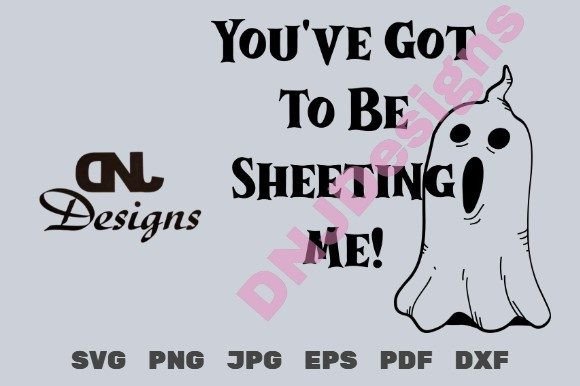
The moment you open You’ve Got to Be Sheeting Me Cut File PK, the tone is unmistakable: playful, slightly cheeky, and perfectly seasonal without leaning into cliché. It’s an illustration-based graphic—not a script font with clipart ghosts—but a cohesive visual phrase with implied texture (think soft sheet folds, gentle ghost contours) and balanced negative space. That matters more than you’d think in machine embroidery design: too much density kills breathability; too little loses impact. This one walks that line with quiet confidence.
I tested it on a midweight cotton canvas tote first—hooped with medium tear-away stabilizer—and was struck by how cleanly the lettering resolved. The “sheeting” pun reads instantly, even at 3.5 inches wide. No squinting. No lost detail in the ghost’s curve or the subtle drape of the sheet. That tells me the original vector work was thoughtful, not rushed—a relief when you’re sourcing Graphics for commercial embroidery.
Where It Works Best (and Why Your Customers Will Notice)
This isn’t a one-size-fits-all embroidery file. But in the right context? It elevates the whole product.
- Sweatshirt embroidery: On heather gray fleece, paired with matte black thread, the design gains cozy, boutique-ready charm—ideal for small shop merchandise or craft fair apparel.
- Embroidered patch: Stitched onto twill and heat-sealed to denim jackets or backpacks, it holds shape beautifully. The clean outer edge means minimal fraying during wear.
- Baby embroidery: Yes—even on onesies. At 2.75 inches, it fits comfortably above the waistband without overwhelming delicate fabric. Just swap to soft poly thread and use light cut-away stabilizer.
- Holiday gift items: Think pillow covers, tea towels, or aprons. The humor lands gently—family-friendly but not childish—making it a smart pick for personalized gifts that feel handmade, not mass-produced.
What stands out is how You’ve Got to Be Sheeting Me Cut File PK supports brand consistency. Whether you’re an Etsy seller curating a “spooky-but-sweet” collection or a café embroidering staff aprons, this design reads as intentional—not tacked-on. That builds customer trust faster than any listing description ever could.
Where to Proceed With Care
No design is bulletproof—and this one has clear boundaries. Here’s where I slowed down and double-checked:
- Stretchy fabric: Avoid on ribbed knits or lightweight jersey unless you add adhesive + cut-away stabilizer *and* reduce stitch density manually. The ghost’s smooth curves can pucker if tension isn’t dialed in.
- Dark fabric + light thread: Tested on navy canvas with ecru thread—it read well, but only because the fill stitch density was moderate. On ultra-dense versions (if your file allows adjustment), the ghost lost definition. Always preview in grayscale mockups.
- Caps and curved surfaces: Not ideal for front-panel cap embroidery. The width-to-height ratio favors flat or gently contoured surfaces like tote bags or pillow fronts—not steep crowns.
- Tiny hoops (under 4”): You’ll need to resize carefully. The lowercase “g” in “Got” and the ghost’s eye are small but legible down to ~2.25”. Below that, test stitch first—running stitch outlines help, but satin stitch areas may blur.
Designer Notes You’ll Actually Use
Before committing to production—or listing it in your shop—run these checks:
- Test the You’ve Got to Be Sheeting Me Cut File PK on scrap fabric matching your final product’s weight and stretch.
- Compare thread colors side-by-side on light *and* dark fabric swatches—not just your screen.
- Review stitch density: high fill areas should breathe, especially on baby items or kitchen textiles meant for frequent washing.
- Confirm hoop size compatibility. If you’re using multi-needle machines, check jump stitch placement—this design doesn’t rely on excessive trims, which is a win.
- Inspect small details in your embroidery software: ghost eye, sheet folds, letter spacing. They should scale cleanly.
- Verify licensing. Since this falls under Illustrations, confirm whether your intended use—like selling finished embroidered totes on Etsy—is covered before launching.
And one last note: this design thrives when paired with restraint. Let it be the focal point—no extra borders, no secondary motifs competing for attention. Its strength is clarity, not clutter.
Final Thought: Humor That Stitches Well
As a designer who’s stitched hundreds of “funny” phrases—from coffee mugs to baby bibs—I can tell you most don’t survive the jump from screen to fabric. They get muddy. Or stiff. Or just… try too hard. You’ve Got to Be Sheeting Me Cut File PK avoids all that. It’s got rhythm, readability, and a quiet confidence that translates directly into a polished finished product. Whether you’re building a craft business, prepping holiday inventory, or making a single heartfelt gift, this embroidery file earns its place—not because it’s trendy, but because it’s *well-made*. And in embroidery, that distinction is everything.