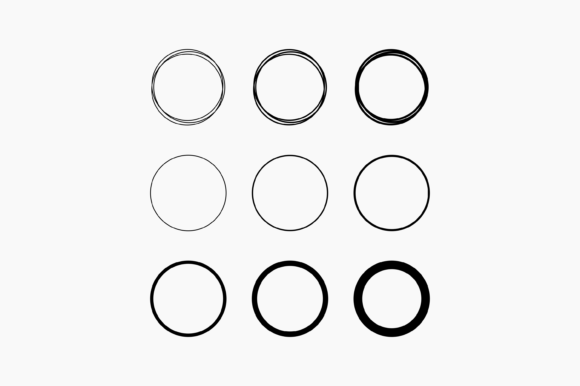
Circle Frame: Graphics & Crafts Design Asset Review
As a graphic designer who’s built brand identities for handmade businesses, launched seasonal print-on-demand collections, and crafted social media graphics for Etsy sellers and local boutiques, I recently evaluated Circle Frame for a real client project: a spring-themed botanical tea line launching on Shopify and Instagram. The goal? A cohesive visual language—soft, organic, and artisanal—that feels hand-crafted but professionally polished. Here’s my unfiltered assessment of how Circle Frame performs in live design work.
A First Impression That Sets the Mood
Circle Frame opens with quiet confidence—not flashy, not fussy. It’s a clean, centered circular border with subtle texture variation (a gentle hand-drawn quality, not rigid geometry), suggesting warmth without sacrificing structure. It doesn’t scream “vintage” or “modern”—it lands somewhere in between: contemporary enough for digital ads, tender enough for artisan packaging. For the tea brand, it immediately evoked apothecary labels, pressed-flower journals, and ceramic mug decals—exactly the emotional tone we needed.
Where Circle Frame Elevates Real Client Work
In practice, Circle Frame shines as a supporting brand element, not a hero logo—but that’s where its value lies. It performed exceptionally well across several high-impact uses:
- Product mockups: Placed around herbal blend photos on mugs, tins, and tea sachets, Circle Frame added instant cohesion—no extra illustration needed. Its balanced weight held up against natural textures like kraft paper and linen.
- Sticker design & Cricut projects: The included SVG and DXF files cut cleanly on vinyl and cardstock. No jagged edges, no stray anchor points—even at 2" diameter. Perfect for small-batch sticker sheets or custom gift tags.
- Social media graphics: As a framing device for Instagram Reels thumbnails and Pinterest pins, Circle Frame created visual rhythm without competing with copy. Paired with a soft sans serif (like Poppins Light), it felt editorial and trustworthy.
- Printable design & packaging details: Used as a decorative frame for ingredient callouts on back-of-pack labels or as a subtle border on downloadable recipe cards, it reinforced craft authenticity while maintaining readability.
- Canva templates & digital product bundles: Dragged into Canva, the PNG with transparent background layered flawlessly over gradients and photos. The EPS vector scaled infinitely for large-format posters or website hero sections.
Strategic Placement: Where It Works Best
Circle Frame excels in contexts that benefit from gentle containment and tactile charm:
- Hero graphics for handmade business websites
- Themed collections (e.g., “Summer Botanicals,” “Holiday Miniatures”)
- Decorative accents on tote bags, notebook covers, and greeting cards
- Sublimation design backgrounds for mugs and apparel (especially when paired with minimalist typography)
- Supporting elements in brand identity systems—think pattern extensions, divider lines, or secondary logo frames
Design Limits: Use With Intention
This isn’t a universal solution. Circle Frame can weaken visual hierarchy if misapplied:
- Avoid small sizes: Below 1.5", fine details blur—even the SVG loses nuance on mobile app icons or favicon-sized assets.
- Don’t layer over busy or low-contrast backgrounds: On floral patterns or dark charcoal grays, the frame’s delicate stroke disappears unless manually adjusted (stroke width increased or color inverted).
- Not ideal for corporate or tech branding: Its organic rhythm clashes with strict grid systems or ultra-minimalist identities (e.g., SaaS dashboards or law firm letterheads).
- Test with your type pairings: It harmonizes beautifully with rounded sans serifs and gentle script fonts—but competes with bold display fonts or tightly spaced serif headlines. Always preview live text inside the frame.
Designer Notes: What to Check Before Client Use
Before dropping Circle Frame into a commercial design, I ran these practical checks:
- Contrast test: Viewed in black-and-white mode—confirmed legibility on both light and dark substrates.
- Transparency audit: Checked the PNG file: crisp alpha channel, zero fringing or halo artifacts.
- Vector inspection: Opened the SVG in Illustrator—paths were fully editable, grouped logically, and free of hidden layers or redundant points.
- File format alignment: Confirmed EPS works for legacy print workflows; DXF imports cleanly into Cricut Design Space and Silhouette Studio.
- Licensing verification: Reviewed terms—yes, it includes full commercial license for unlimited end products (stickers, merch, POD, etc.), no attribution required.
- Mockup realism: Applied Circle Frame to actual mug and sticker mockups—not just flat previews—to assess scale, proportion, and tactile believability.
Final Verdict: A Thoughtful Creative Asset
Circle Frame isn’t revolutionary—but it’s reliably effective. For designers building visual systems for small businesses, crafters scaling their Etsy product lines, or marketers launching seasonal campaigns, it delivers what many generic clipart packs miss: intentional mood, consistent execution, and versatile file support. It won’t replace custom illustration, but it saves hours of refinement when you need a warm, balanced, printable design element that feels human-made—not algorithm-generated. In the tea brand project, it became the quiet anchor across 14 touchpoints—from Instagram Story highlights to shelf-ready product labels—proving that sometimes, the most powerful graphic design asset is the one that supports without shouting.