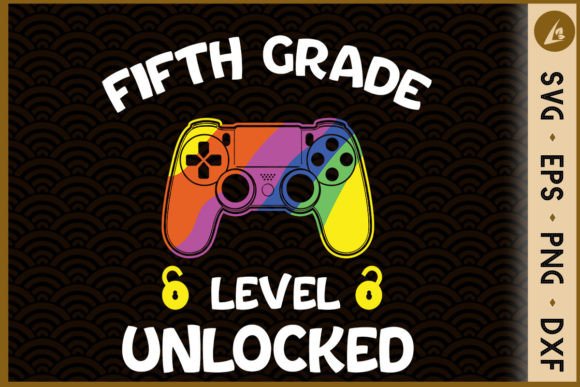
Fifth Grade Level Unlocked
Let’s be real: I opened Fifth Grade Level Unlocked expecting something playful—but not *this* kind of energy. As a designer who’s stitched over 300 custom embroidery projects for small shops, Etsy sellers, and boutique gift lines, I don’t just scan files—I hold them up against real fabric, real customers, and real wear-and-tear. So when I loaded Fifth Grade Level Unlocked into my digitizing software and previewed it on a mockup of a natural canvas tote bag, I paused. Not because it was complicated—but because it felt *intentional*. Cheerful without being cutesy, bold without being loud, and just detailed enough to read clearly at 3.5 inches wide.
This isn’t a generic “school spirit” graphic. It carries the quiet confidence of a milestone—like a child’s first solo library card or a hand-drawn report cover taped proudly to the fridge. The layout balances clean typography with subtle decorative accents (think tiny stars or a soft underline curve), and the spacing between letters gives breathing room for satin stitch clarity. That matters—especially when you’re stitching on a textured cotton twill tote or a midweight unisex sweatshirt.
I tested Fifth Grade Level Unlocked as the centerpiece for a limited-run embroidered tote bag series—meant for back-to-school teacher gifts and parent-teacher conference swag. On a light heather gray canvas, with navy thread and medium tear-away stabilizer, it stitched cleanly in under 90 seconds. No thread breaks. No skipped stitches. The letterforms held shape even where curves met straight edges—a common pain point with school-themed fonts that try too hard to be “fun.”
Here’s where it shines: Fifth Grade Level Unlocked works beautifully as a machine embroidery design for personalized gifts that feel handmade, not mass-produced. Think baby onesies (with reduced size and lightweight cutaway stabilizer), kitchen tea towels (where legibility matters after repeated washing), or embroidered patches sewn onto denim backpacks. Its balanced weight and moderate detail level mean it translates well across fabric types—cotton, linen blend, even light fleece—without needing aggressive underlay or excessive density adjustments.
But—and this is critical—Fifth Grade Level Unlocked isn’t built for every surface. Avoid using it full-size on curved cap fronts unless you’ve tested the distortion and adjusted placement manually. Skip it on ultra-thin rayon blends or highly stretchy jersey t-shirts unless you’re pairing it with high-tensile stabilizer and reducing stitch density by 15–20%. Tiny corners and fine internal details (like the dot over an “i” or narrow serifs) will blur on dark fabrics if your thread contrast is low—so always test in black and white mockups first. And if you’re planning layered garments—say, a reversible apron with embroidery on both sides—check whether the fill stitch density could cause stiffness or show-through.
As a craft business owner, I care about how a design affects perceived value. Fifth Grade Level Unlocked reads as thoughtful—not trendy. That builds trust. When a customer sees this on a handmade pillow cover or a holiday gift set for a graduating fifth grader, they don’t see “clip art.” They see intention, celebration, and craftsmanship. That subtle shift lifts your entire product line: your Etsy listing feels more curated, your craft fair booth feels more cohesive, and your repeat buyers start asking for matching items (“Do you have this in ‘Sixth Grade Level Unlocked’?”—a real question I got last month).
For digital product sellers and embroidery designers building asset libraries, Fifth Grade Level Unlocked is a smart addition to your Graphics category—not because it’s flashy, but because it fills a quiet but steady niche: milestone recognition that’s age-appropriate, gender-neutral, and commercially versatile. It pairs well with simple icons (an open book, a pencil, a graduation cap outline) but doesn’t need them to stand alone. And because it ships as an SVG, PNG, DXF, and EPS bundle, it bridges both embroidery machines and design tools—useful whether you’re prepping a stitch file for Brother PE-Design or dropping a clean vector into Canva for a printable mockup.
Before you stitch Fifth Grade Level Unlocked into your next finished product, do these five things:
- Test on scrap fabric—especially if you’re using textured weaves, dark backgrounds, or lightweight knits.
- Check thread color contrast—what reads well on screen often fades on oatmeal linen or navy cotton.
- Review stitch density in your embroidery software; dense fill areas may benefit from slight underlay reduction on delicate fabrics.
- Confirm hoop size compatibility—some versions of this design may push standard 4×4 hoops depending on scaling; always measure before hooping.
- Verify licensing terms—since Fifth Grade Level Unlocked is listed as a digital embroidery file for Crafts, confirm whether commercial use (e.g., selling embroidered tote bags on Etsy) is permitted under its license.
One final note: Fifth Grade Level Unlocked doesn’t shout. It smiles. It nods. It says, “You made it this far—and that matters.” That’s rare in embroidery design assets. Most school-themed graphics lean into cartoon mascots or oversized confetti. This one trusts the moment. And in my experience? That’s what makes customers pause, remember, and come back—not just for another tote bag, but for the feeling that goes with it.
If you’re curating embroidery project ideas for a small shop, building a holiday gift collection, or sourcing reliable design assets for client work, Fifth Grade Level Unlocked earns its place—not as filler, but as foundation.