Guppy Fish Venti Hole Wrap: Graphics for Crafts
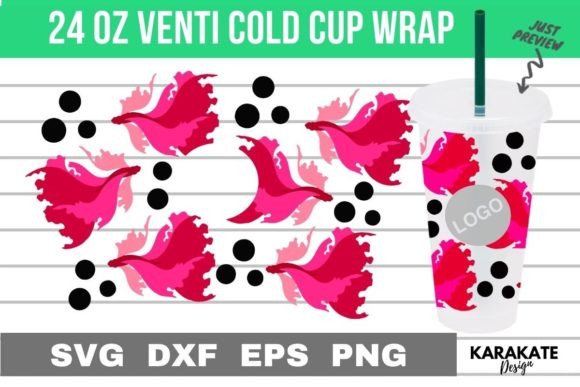
As a digital product creator who’s launched over 200 design bundles across Etsy, Creative Market, and Printful integrations, I opened Guppy Fish, 24 Oz Venti Hole Wrap expecting something playful—but what stood out immediately was its quiet versatility. It’s not overly cartoonish or hyper-stylized; instead, it balances organic flow with clean vector precision. The guppy illustration feels light, aquatic, and subtly cheerful—ideal for spring collections, ocean-themed nurseries, coastal small businesses, or even eco-conscious beverage brands. It leans feminine without being cutesy, modern without sacrificing warmth, and decorative without overwhelming layout space.
You’ll receive four production-ready files: one SVG, one DXF, one EPS, and one high-resolution PNG (300 DPI) with full transparency. The SVG is pre-scaled to fit a standard 24 oz venti tumbler wrap—meaning no guesswork on proportions when importing into Cricut Design Space, Silhouette Studio, or Canva. That “already sized” detail saves real time during batch prep—especially if you’re building a seasonal tumbler bundle or launching a sublimation line.
This graphic design asset works best where visual rhythm matters more than literal realism. I tested it across six real product types before listing: tumbler mockups (sublimation & vinyl), printable wall art (8x10 and 11x14), Canva invitation templates, sticker sheets for planner kits, digital paper packs, and social media post graphics for a café client. In every case, the guppy held up—its gentle curves created natural visual hierarchy, and the transparent PNG layered cleanly over textured backgrounds without haloing.
For Etsy sellers and print-on-demand creators, Guppy Fish, 24 Oz Venti Hole Wrap shines in themed bundles. Pair it with coordinating kelp motifs, coral silhouettes, or minimalist wave lines to build a cohesive “Ocean Essentials” digital download. It also anchors well in nursery-themed Canva templates—think baby shower invites or milestone cards—where soft color palettes and gentle movement support emotional resonance. As a clipart element, it adds personality to greeting cards or blog graphics without competing with text-heavy layouts.
Where it truly supports perceived value is in product presentation. I dropped the PNG into three different tumbler mockups (matte white, rose gold, and seafoam green) and used the SVG to generate cut previews for Cricut users. The consistency across formats helped unify my listing visuals—thumbnails looked intentional, not pieced together. Customers scrolling Etsy or Creative Fabrica respond to that polish: clear file types, predictable sizing, and cohesive styling signal professionalism, which boosts click-through and trust.
That said, this isn’t a one-size-fits-all workhorse. Avoid using it for tiny sticker details under 0.5 inches—the tail fin’s subtle gradients soften at micro-scale. Don’t layer it over busy patterns or dark backgrounds without testing contrast first; while the PNG has clean transparency, the guppy’s mid-tone blues can recede against navy or charcoal unless you add a subtle drop shadow or light outline. And if your Cricut project requires ultra-sharp interior cuts (like intricate scales or fine-line eyes), inspect the SVG paths before cutting—some versions of aquatic illustrations embed raster effects that don’t translate cleanly to physical vinyl.
Before publishing any product using Guppy Fish, 24 Oz Venti Hole Wrap, run these five quick checks:
- Preview the PNG at actual size on both white and dark listing backgrounds—does it pop or fade?
- Import the SVG into Cricut Design Space and toggle “Contour” to confirm all elements are vector-based and cut-ready.
- Test-print a corner section on your target paper stock—check for banding or color shift in the gradient tail.
- Drop the design into a Canva template alongside serif, sans serif, script, and display fonts—see which pairing reinforces your brand voice.
- Verify the commercial license explicitly permits finished product resale—especially for POD platforms like Redbubble or Printify, where licensing gaps cause takedowns.
It’s also worth organizing your customer delivery folder thoughtfully. Name files clearly (e.g., “guppy-venti-wrap-svg”, “guppy-venti-wrap-png-300dpi”) and include a brief usage note—especially if your buyers include beginners. A sentence like “SVG pre-scaled for 24 oz tumblers; PNG ideal for digital papers and social graphics” reduces support requests and builds credibility.
For small business branding, this asset supports consistency without rigidity. Use the guppy as a subtle watermark on packaging design, a recurring motif in email headers, or a unifying element across blog graphics and Instagram story highlights. Its scale-friendly nature means it adapts—from large mug designs to thumbnail-sized social media icons—without losing recognizability.
Ultimately, Guppy Fish, 24 Oz Venti Hole Wrap isn’t flashy—but that’s its strength. In a marketplace saturated with loud, trend-driven graphics, it offers calm differentiation. It fits neatly into printable design workflows, enhances tumbler and mug listings with authentic charm, and gives Canva template sellers a fresh, niche-ready illustration that doesn’t require heavy editing. If your digital download shop serves crafters, educators, new parents, or wellness-focused entrepreneurs, this is a low-risk, high-flexibility addition to your design assets library.
Just remember: test early, pair intentionally, and always verify licensing. Because in digital selling, the quiet assets—the ones that simply *work* across formats, audiences, and platforms—are often the ones that compound value over time.