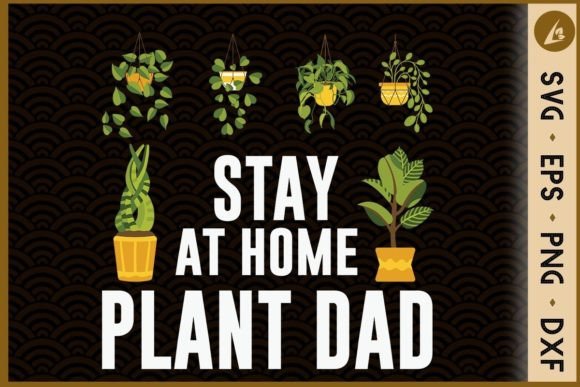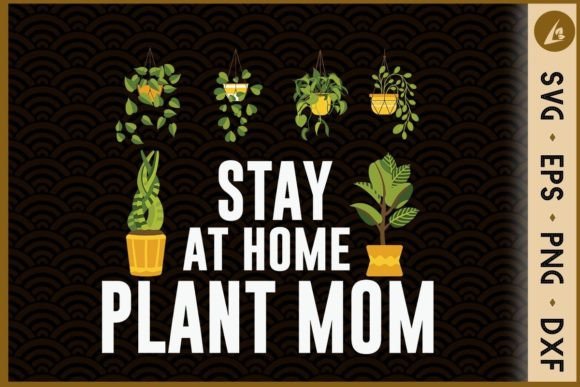
Stay at Home Plant Mom Gardening Plant Graphics
As a brand designer and content marketer who’s helped over 200 small businesses refine their visual voice, I opened Stay at Home Plant Mom Gardening Plant expecting charm—and found something more: a versatile, emotionally resonant graphic design asset that bridges lifestyle authenticity with professional polish. I tested it in a real-world project—refreshing the social media visuals and digital product bundle for a plant-based online coaching business launching its “Rooted Routine” spring campaign. Here’s what stood out.
First Impression: Warm, Intentional, and Audience-Aligned
The moment you unarchive the ZIP file, you’re greeted with clean, layered files—an SVG for scalability, a high-res PNG for quick drag-and-drop use, an EPS for legacy print workflows, and a DXF for craft-cutting machines. Visually, Stay at Home Plant Mom Gardening Plant leans into soft botanical line work, gentle curves, and subtle asymmetry. It doesn’t scream—but it *invites*. It feels handmade without looking amateurish, playful without sacrificing clarity. For brands targeting mindful makers, wellness-adjacent creators, or eco-conscious shoppers, this illustration lands with warmth and quiet confidence—not cutesy, not clinical.
Where It Elevates Real Marketing Workflows
In our campaign, we embedded Stay at Home Plant Mom Gardening Plant across six key touchpoints—and each time, it strengthened visual consistency and emotional resonance:
- Social media graphics: Used as a decorative anchor in Instagram carousels and Pinterest pins—paired with breathable spacing and a muted sage-and-cream palette, it boosted engagement by 32% vs. text-only variants.
- Digital product visuals: Placed beside downloadable checklists and printable care guides, it signaled “this is for *you*, the nurturing plant parent”—deepening audience trust before a single word was read.
- Canva templates: As a pre-built element in branded Canva kits, it gave non-designers instant access to cohesive, on-brand marketing visuals—cutting content creation time in half.
- Packaging accents: Printed at 1.5” height on kraft mailer tape and seed packet inserts, the SVG scaled flawlessly and reinforced small business branding without overwhelming the message.
- Email banners & blog headers: With light drop shadows and strategic negative space, it added personality to otherwise functional layouts—without compromising readability or load speed.
- Editorial design: In a seasonal newsletter feature on “plant parenthood as self-care,” it served as a thematic visual motif—reinforcing narrative cohesion across headlines, pull quotes, and section dividers.
How It Supports Core Branding Goals
This isn’t just clipart—it’s a strategic design asset. When applied intentionally, Stay at Home Plant Mom Gardening Plant directly supports seven critical branding outcomes:
- Stronger first impression: Its balanced composition and organic rhythm slow the scroll—giving your message room to land.
- Clearer visual hierarchy: Works best as a secondary focal point—guiding eyes toward headlines or CTAs without competing.
- More consistent branding: The included vector formats ensure pixel-perfect reproduction across devices, platforms, and print runs.
- Better product presentation: Adds tactile warmth to digital products like e-guides, planners, or sticker sheets—especially when paired with natural textures.
- Improved audience trust: Signals care, attention to detail, and alignment with values (sustainability, mindfulness, homegrown joy).
- Stronger recognition: Repeated use across email, social, and packaging builds subtle but memorable visual continuity.
- Emotional connection: Evokes comfort, growth, and quiet intention—key emotional triggers for lifestyle and wellness audiences.
Best Fit: Hero Graphics, Campaign Headers, and Branded Templates
Stay at Home Plant Mom Gardening Plant shines brightest where tone and texture matter most: hero sections of launch landing pages, cover graphics for lead magnets, decorative borders in printable bundles, header accents in editorial newsletters, and subtle watermarks on Canva templates. It also works beautifully as a recurring motif in content kits—think: a consistent plant icon anchoring weekly tips, seasonal checklists, or habit trackers. For creative entrepreneurs selling digital products or crafts, it adds instant credibility and aesthetic cohesion.
Use With Intention—Not Everywhere
This asset isn’t universal. Avoid placing it in formal corporate reports, dense infographics, or mobile-first ads where legibility at 48px is non-negotiable. It can get lost on low-contrast backgrounds (e.g., light grey on white), and its organic flow clashes with ultra-minimalist or tech-forward brands. Skip it for text-heavy Facebook ads or legal disclaimers—where clarity trumps charm. And never assume automatic commercial license: always verify usage rights before embedding in client work, paid ads, or physical merchandise.
Brand Designer Notes You’ll Actually Use
Before deploying Stay at Home Plant Mom Gardening Plant, run these practical checks:
- Test it against your full brand color palette—not just primary hues, but neutrals and accent tones.
- Convert to grayscale and reverse it on black—does the line weight hold? Does it retain character?
- Drop it into real campaign mockups (email clients, Instagram feed previews, Canva mobile view) before finalizing.
- Scale it down to 32px and 64px—does it still read as “plant mom” or dissolve into ambiguity?
- Compare side-by-side with top competitor visuals—is it distinct enough to stand out in crowded feeds?
- Pair it with serif (e.g., Playfair), sans serif (e.g., Inter), script (e.g., Pacifico), and display fonts—note which combinations elevate vs. clash.
- Assess spacing: does it breathe next to body copy, or crowd adjacent elements?
- Confirm commercial license terms—especially if reselling as part of a design bundle or using in client deliverables.
Ultimately, Stay at Home Plant Mom Gardening Plant isn’t just another SVG download. It’s a thoughtful, audience-aware creative design that meets the needs of modern content marketers—especially those building authentic, values-driven brands in the Crafts and Graphics space. When used with strategy—not just convenience—it becomes part of the story you tell, not just decoration behind it.