Cartoon Ice Cream: A Designer’s Real-World Embroidery Review
First Impressions: Sweet, Simple, and Surprisingly Versatile
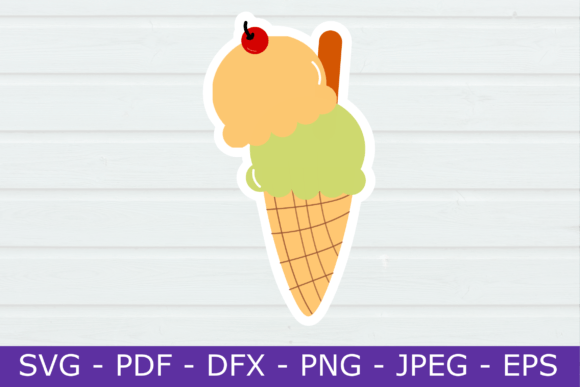
When I opened Cartoon Ice Cream, my first thought wasn’t “cute sticker”—it was “this could actually stitch cleanly on a baby onesie.” The design carries that joyful, nostalgic energy of vintage ice cream trucks and summer sidewalk chalk—rounded shapes, bold outlines, and just enough detail to read at a glance. It’s not overly fussy: no tiny sprinkles demanding 60-stitch precision, no delicate swirls that’ll vanish in satin stitch. Instead, it’s got friendly proportions, clear negative space, and a visual rhythm that translates well from screen to fabric. As a designer who’s stitched everything from boutique aprons to Etsy nursery bundles, I immediately saw its home—not as a standalone graphic, but as a *handmade accent*: the cheerful pop on a linen tea towel, the playful surprise on a denim cap brim, or the sweet focal point of a custom embroidered tote bag for a local ice cream shop.
Where It Shines (and Where It Needs a Little Help)
Cartoon Ice Cream works beautifully for small-to-mid scale embroidery projects where charm matters more than photorealism. On a lightweight cotton sweatshirt? Yes—it reads clearly without overwhelming the garment. On a woven cotton pillow cover? Absolutely—the clean lines hold up even with moderate thread tension. For baby embroidery on gauzy swaddle blankets or organic cotton bibs? With proper stabilizer and reduced density, it maintains its friendliness without puckering. And for craft business owners building cohesive holiday embroidery collections? This design fits right in alongside gingerbread men and snowmen—whimsical but not childish, seasonal but not dated.
That said, it’s not magic. On highly textured fabrics like heavy terry cloth or thick knit sweatshirts, some of the softer curves may blur unless you adjust stitch density or add an extra layer of cutaway stabilizer. On stretchy fabric—think ribbed baby bodysuits or performance-blend tees—you’ll want to test hoop tension and backing carefully; the rounded base of the cone can distort if the fabric shifts mid-stitch. And while it scales down decently, I wouldn’t push it below a 3” width for most apparel applications—tiny details like the scoop’s subtle highlight lose definition in fill stitch at under 2 inches.
Real Project Moment: Stitching It for a Local Bakery’s Merchandise Line
Last month, I used Cartoon Ice Cream as the centerpiece for a set of embroidered kitchen towels and canvas aprons for a neighborhood bakery launching their summer “Scoop & Serve” campaign. We placed it front-and-center on the towel’s lower corner and centered it above the pocket on each apron. Because the design is inherently balanced—no heavy asymmetry or long trailing elements—it hooped smoothly and stitched consistently across 42 units. Customers responded instantly: “It makes me smile every time I dry a dish,” one told us. That emotional resonance is gold for handmade product branding. It didn’t look like clip art stitched onto fabric—it looked like part of the brand’s voice, warm and intentional.
What It Adds to Your Finished Product
- Visual appeal: Brightens neutral backgrounds without clashing—works equally well on oatmeal linen, navy denim, or ivory cotton.
- Stitching clarity: Clean edges mean fewer thread breaks and smoother satin stitch transitions, especially around the cone’s curved rim.
- Product value: Elevates simple items—a plain tote becomes a gift-ready piece; a basic tea towel becomes a boutique staple.
- Customer trust: Its consistency across multiple items signals professionalism, not DIY guesswork.
- Giftability: Instantly communicates joy and occasion—ideal for baby showers, teacher appreciation, or small business thank-yous.
Practical Notes Every Embroidery Designer Should Check
Before adding Cartoon Ice Cream to your next machine embroidery design folder—or listing it as part of a digital embroidery file bundle—run through these quick checks:
- Test on scrap fabric that matches your final project’s weight and stretch.
- Review thread color contrast: this design relies on shape, not shading, so high-contrast combos (navy thread on cream, white on charcoal) maximize impact.
- Confirm stitch density aligns with your fabric—reduce fill stitch % slightly for delicate weaves or baby items.
- Inspect corners and curves in your embroidery software: does the cone’s tip hold sharpness, or does it soften into a blob? Adjust if needed.
- Mock it up in black and white first—many buyers preview digitally, and clarity in grayscale matters.
- Compare how it reads on light vs. dark fabric backgrounds using printable mockups—some versions of this design may need a slight shadow or outline tweak for darker substrates.
- Use appropriate stabilizer: tear-away for stable wovens, cutaway for knits or lightweight fabrics.
- Verify licensing terms—since Cartoon Ice Cream is categorized as Graphics and intended for Crafts, confirm whether commercial use (e.g., selling finished embroidered patches or digital embroidery files) is permitted before scaling for your Etsy shop or small shop product line.
A Design That Feels Like a Collaboration, Not Just a Download
What makes Cartoon Ice Cream stand out isn’t technical complexity—it’s thoughtful simplicity. It leaves room for *your* craftsmanship to shine: the quality of your thread, the precision of your hoop, the warmth of your brand voice. It doesn’t shout; it invites. Whether you’re stitching personalized gifts for friends, building a cohesive line of nursery decor, or creating custom apparel for a local café, this design supports your intention instead of competing with it. It’s the kind of asset that earns repeat use—not because it’s flashy, but because it reliably delivers charm, clarity, and quiet confidence in every finished product.